

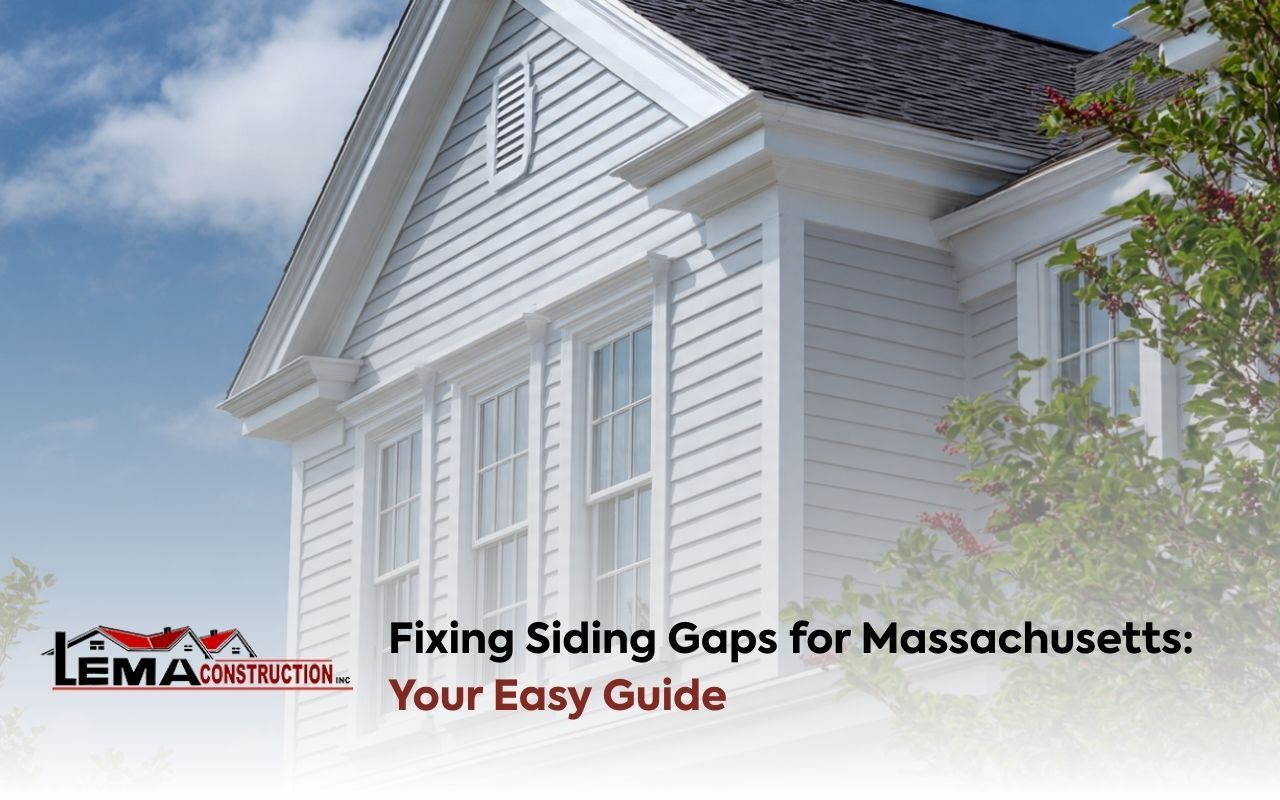
Fixing Siding Gaps for Massachusetts: Your Easy Guide
Focusing on home care in Massachusetts, homeowners know the stress of harsh weather. One common issue is Siding Gaps for Massachusetts homes. These gaps may look small, yet they can trigger big problems over time.
For example, moisture can slip behind siding and weaken your home’s structure. As a result, mold and mildew may grow and raise repair needs. So, this guide explains what to watch for and how Lema Construction Inc can help you protect your home.
Common causes of siding gaps in Massachusetts
In Massachusetts, harsh freeze and thaw changes can push siding to move often. Over time, boards can shift, and small openings can form. Because of this, Siding Gaps for Massachusetts properties may show up even after a clean install.
Big temperature swings that make boards expand and shrink
Install mistakes, like tight nails that limit natural movement
Heavy storms and strong winds that pull panels apart
Water damage that bends wood or rusts fasteners
Soil movement near older foundations
Also, moisture damage can worsen gaps fast. When water gets behind panels, wood can bend and fasteners can weaken. Consequently, panels may pull away and openings grow. To learn more about local options, visit siding services in Massachusetts.
Signs to spot damage early
Even small changes on the outside can point to bigger trouble inside. Therefore, check your siding often, especially after storms. If you suspect Siding Gaps for Massachusetts areas, focus on the edges and seams first.
Panels that look bent, bubbled, or uneven
Loose sections that shift when touched
Dark streaks, stains, or discoloration near edges
Drafts or higher heating bills during winter
Also, watch for Signs of moisture behind siding like stains along seams or soft spots when pressed. If panels move or creak, that can hint at weak fasteners or hidden rot. In that case, Lema Construction Inc can help you catch problems before they spread.
Why quick care matters for your home
Regular care keeps your home comfortable and helps protect its value. When you fix small cracks early, you block rain and melting snow from slipping inside. In other words, that is How siding protects walls during tough New England seasons.
Reduces the chance of mold and mildew growth
Helps prevent wood rot and insect activity
Supports stable indoor comfort and energy savings
Protects framing and insulation from long-term damage
However, delays can make damage spread behind the siding. Then, repairs may involve deeper wall parts and more labor. If you want a full view of home upgrades Lema Construction Inc offers, explore all services.
Tools and materials you may need
Before you start, gather tools so work stays safe and smooth. For small jobs, basic items often do the trick. Still, if you see large Siding Gaps for Massachusetts areas, you may need more materials.
Caulk gun and outdoor-grade sealant
Utility knife and putty knife
Small brush or canned air for cleaning seams
Gloves, eye protection, and a stable ladder
Backer rod for wider gaps
Also, you may need matching paint or finish for a clean look. For vinyl, repair kits can help with small replacements. If gaps are widespread, Lema Construction Inc may suggest new boards and rust-resistant nails.
Step-by-step sealing for small gaps
Start by clearing the area and cleaning the siding surface. Then, let it dry fully so sealant sticks well. Next, measure each gap so you choose the right backer rod. If a gap is narrow, you can often seal it without rod.
Clean the gap with a small brush or air
Add backer rod if the gap is wide
Apply a steady bead of outdoor sealant
Smooth the bead so it seals both sides
Let it cure before painting or touching up
After that, check the area again after the next heavy rain. If water marks return, the gap may be deeper than it looked. At that point, Siding repair for Massachusetts homes may be the safer option with a pro team.
Prevent future siding problems
Small habits can reduce new gaps over time. For instance, clean gutters so water moves away from siding edges. Also, trim plants so branches do not rub panels. As a result, siding stays steadier and dries faster after storms.
Keep gutters and downspouts clear
Re-seal around windows and doors every few years
Check caulk lines after winter and big storms
Add metal flashing above risky spots
If your roof drainage causes splash-back, roof work may help too. You can compare options with roofing services in Abington MA.
Frequently Asked Questions
How do I know if my siding gaps are serious?
If gaps grow, panels move, or stains appear after rain, the issue may be serious. Also, soft spots can point to hidden damage.
Can I seal gaps on my own?
Yes, small gaps can be sealed with outdoor sealant. However, large gaps may need board fixes to stop repeat leaks.
What causes moisture behind siding?
Water can enter through cracks, weak caulk, or poor drainage. Then, it can soak wood and weaken fasteners.
How often should I inspect my siding in Massachusetts?
Inspect in spring and fall, and after major storms. That timing helps catch issues before winter freeze and thaw stress.
Where can I see what others say about Lema Construction Inc?
You can read client feedback and project experiences on the Lema Construction Inc reviews page.
Long-lasting protection for your home
When you fix gaps early, you protect comfort and reduce future damage risks. In short, Siding Gaps for Massachusetts should not be ignored, because moisture can spread fast. With routine checks and quick sealing, your siding can stay a strong barrier for years.
If you want expert help, connect with Lema Construction Inc through the contact page to discuss next steps that fit your home.